Both treatments smooth the skin by removing dead cells, which is why they are often confused. Here is how to tell them apart.
The Basic Idea
Both derma polishing and microdermabrasion are mechanical exfoliation treatments that remove the dead outer layer of skin to reveal fresher, smoother skin beneath. They are non-invasive and require no significant downtime.
Different clinics use different names and devices, so the label alone does not tell you what is being used.
How the Techniques Differ
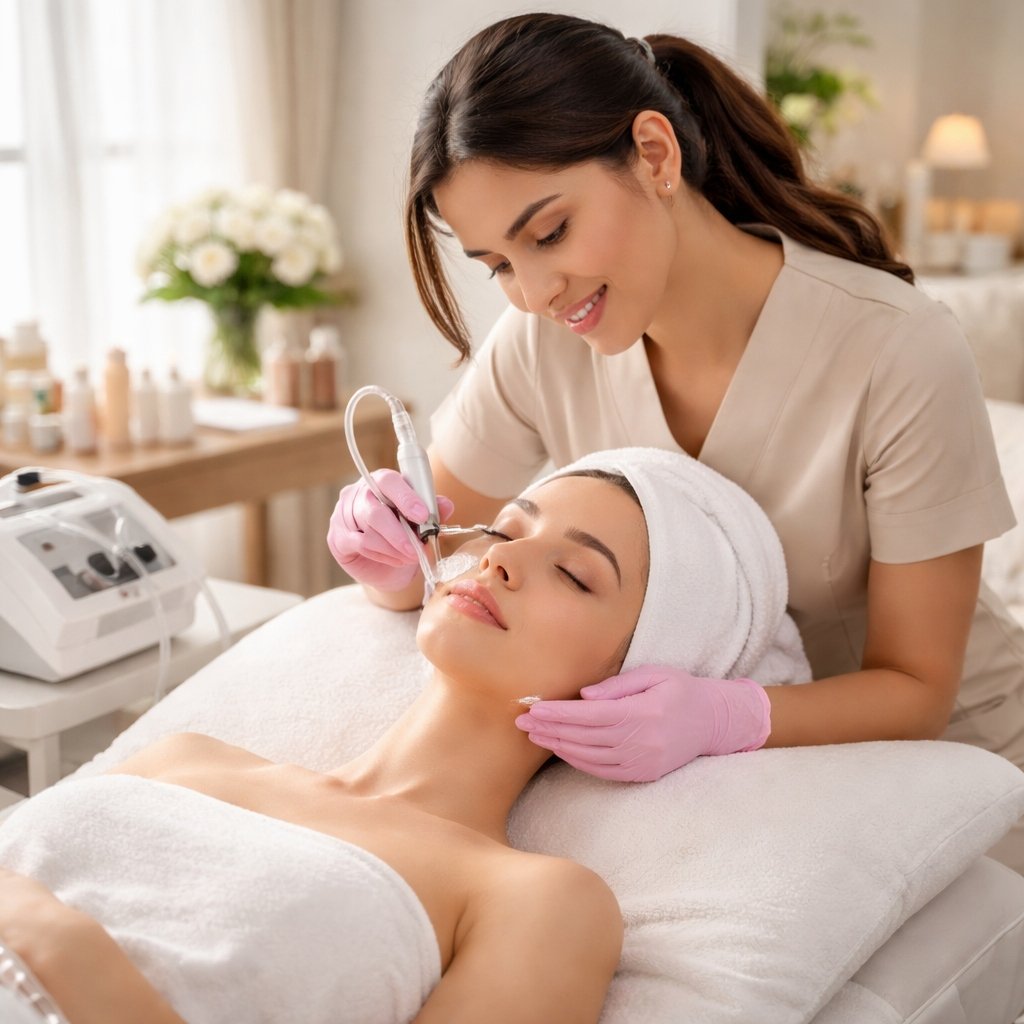
Microdermabrasion traditionally uses fine crystals with suction or a diamond-tipped wand to abrade the skin. Derma polishing, as offered in many clinics, uses controlled polishing devices to exfoliate and, in some cases, infuse serums.
The depth and intensity depend on the device and the settings chosen by the practitioner.
What They Treat
Both can help with dullness, mild tanning, rough texture and congested pores, and can improve how products absorb. They are not designed for deep scars, strong pigmentation or advanced ageing, for which other treatments are better suited.
They are best viewed as skin refinement treatments.
Skin Types and Precautions
Sensitive, very dry or acne-inflamed skin may need a gentler approach or a delay. Active infections, eczema flares or recent sunburn are reasons to postpone.
Over-exfoliation is a real risk, so more is not better.
Aftercare
Expect mild pinkness that settles quickly. Use gentle products, moisturise well and wear sunscreen, as freshly exfoliated skin is more sensitive to UV.
Avoid scrubs, strong actives and waxing for a few days unless your doctor advises otherwise.
Book a Consultation at Our Delhi Head Office
Visit Rupayna Luxe Skin, Hair & Laser Clinic at E-492, Inder Mohan Bhardwaj Marg, Block E, Greater Kailash II, New Delhi 110048. Our secondary office is in Mumbai — call 7378-626348 to check availability there.
Explore Derma PolishingAreas We Serve Near Our Delhi Head Office (GK2)
Frequently Asked Questions
How often can I do derma polishing?
Most clinics suggest spacing sessions several weeks apart. Your doctor will recommend a schedule based on your skin.
Is it suitable for Indian skin?
When performed at appropriate intensity by a trained professional, it is generally used on a range of skin tones.
This article is for general information only and is not a substitute for a medical consultation. Suitability, risks and outcomes vary from person to person and should be assessed by a qualified doctor.