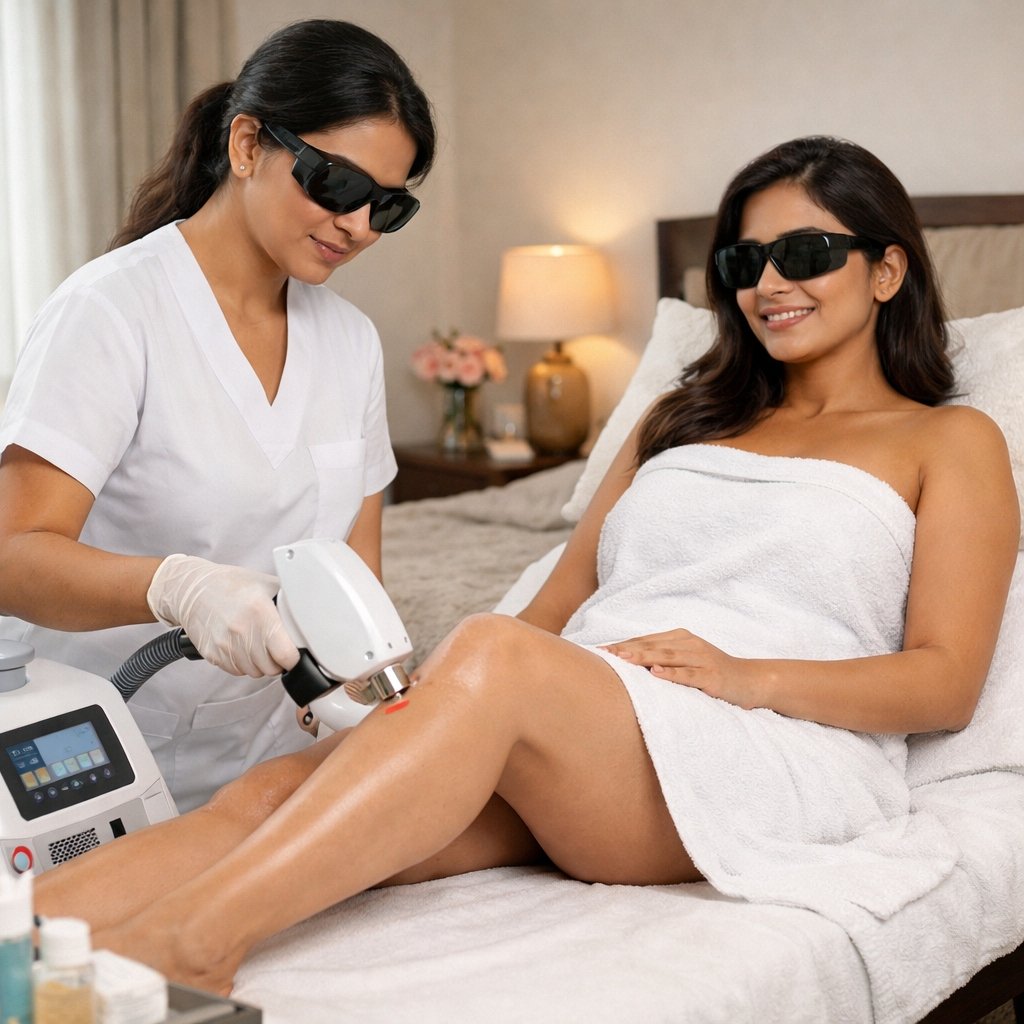
More men in Delhi are asking about laser hair removal for the neck, back, chest and beard line. Here is a practical, medically grounded look at what it can and cannot do.
Why Men Choose Clinical Laser Hair Removal
Men's hair is typically thicker, denser and more hormone-driven than women's, which is why shaving every day can cause razor bumps, ingrown hairs and a permanently shadowed look. Laser hair removal targets the pigment in the hair follicle, gradually weakening it so that growth becomes finer and sparser over a course of sessions.
Because it is a medical-grade device treatment, it works best when the settings are matched to your skin tone, hair thickness and the body area being treated, rather than a one-size-fits-all programme.
Beard Line, Neck and Cheeks: What to Expect
Many men do not want a completely hairless face. A doctor can clean up the neckline, the upper cheek line and the area under the jaw while leaving the main beard intact. This is often the most requested request for pseudofolliculitis (razor bumps) on the neck.
Facial hair is among the more stubborn areas because the beard is hormone-sensitive, so expect a longer course and occasional maintenance sessions rather than a one-and-done result.
Back, Chest and Shoulders
Large areas such as the back and chest are usually treated in a single visit but need several sessions spaced a few weeks apart, because only hairs in the active growth phase respond at any given time. Hair typically becomes noticeably thinner and slower-growing as the course progresses.
Skin on the back can be prone to acne, so your doctor may want to settle any active breakouts before starting.
How to Prepare for Your First Session
Shave the area a day before your appointment, avoid waxing, plucking or threading for about four weeks beforehand, and stay out of direct sun and tanning. Tell your doctor about any medicines, particularly ones that make skin light-sensitive, and about any history of cold sores if the treatment area is near the mouth.
A patch test on a small area is standard practice, and it is the single best way to confirm that the settings are right for your skin.
Aftercare and Realistic Expectations
Mild redness or a warm, sunburn-like feeling for a few hours is common. Avoid hot showers, saunas, heavy workouts and sun exposure for a day or two, and use a broad-spectrum sunscreen on treated areas that are exposed.
Laser reduces hair significantly and for a long time, but results vary between individuals, and hormonal factors can bring some regrowth. A good clinic will say this upfront.
Book a Consultation at Our Delhi Head Office
Visit Rupayna Luxe Skin, Hair & Laser Clinic at E-492, Inder Mohan Bhardwaj Marg, Block E, Greater Kailash II, New Delhi 110048. Our secondary office is in Mumbai — call 7378-626348 to check availability there.
Explore Laser Hair RemovalAreas We Serve Near Our Delhi Head Office (GK2)
Frequently Asked Questions
Does laser hair removal work on all beard hair?
It works best on dark, coarse hair. Very light, grey or white hair contains little pigment and usually does not respond well. A consultation will tell you what to expect.
How many sessions do men usually need?
It depends on the area and the individual. Larger body areas and the beard commonly need a longer course than the underarms. Your doctor will give an estimate after assessing your skin and hair.
This article is for general information only and is not a substitute for a medical consultation. Suitability, risks and outcomes vary from person to person and should be assessed by a qualified doctor.